 EV Risk Index
2016 BMW i3
The 2016 BMW i3 scores 58/100 on our failure index — moderate risk. 8 recall campaigns on file for the i3.
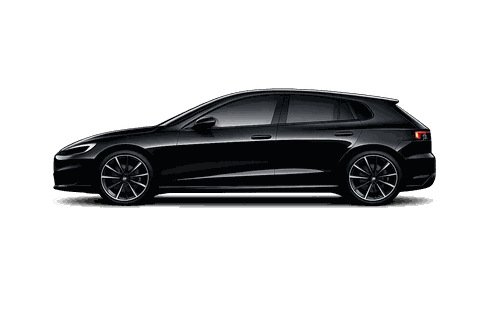
Illustrative silhouette — not the actual vehicle
DiscontinuedLearn more · find one used
Discontinued globally in 2022
Links provided for reader convenience. EV Risk Index earns no referral revenue from these destinations. Silhouette color reflects the vehicle's risk-index band.
- Failure index
- 58/100 (Moderate risk)
- Segment
- Hatchback
- Battery
- 22.6 kWh · NMC
- Battery supplier
- Samsung SDI
- Range (WLTP/EPA est.)
- 130 km
- Fast charging
- 50 kW
- Drivetrain
- RWD
- Region
- Global
- 5-year degradation (est.)
- 20%
Known issues for the 2016 model year
Final 60Ah-only year; NHTSA 17V-720 and 17V-088 recalls apply; BMW offered 94Ah retrofit option to 60Ah owners in select European markets
Diagnostic code reference
Reading codes off a BMW i3 service invoice? Look them up in our OBD-II DTC database →
Service playbooks for this vehicle
- range loss (2014–2022) informational
Editorial assessment
The 2016 i3 is the final year of 60Ah-only production in most markets. Battery remained the original 22.6 kWh Samsung SDI pack, and the vehicle's specification sheet closed the 60Ah chapter unchanged from 2014-2015. The 94Ah successor pack was in development and would launch partway through the 2017 model year, with BMW offering retrofit options to 60Ah owners in certain European markets (notably Germany, France, and the UK). This makes 2016 a transitional year — the last full production year of the original chemistry, with the knowledge that a materially better battery was imminent.
Regulatory exposure mirrors 2015. NHTSA 17V-720 frontal impact campaign applies. REx variants are covered by 17V-088 fuel vapor remedy. The 15V-628 airbag campaign scope ends before 2016 production — 2016 i3s are not included in that campaign. No new 2016-specific defects have entered the NHTSA record.
For used-market buyers, 2016 60Ah examples represent the last BMW-built i3 with the original chemistry. Some European buyers have pursued 94Ah retrofits for these vehicles, though costs typically run $8,000-$12,000 and availability varies by market. A retrofitted 2016 with documented 94Ah installation is closer in ownership proposition to a 2017-2018 94Ah vehicle than to a 60Ah original.
Editor's take
The 2016 i3 is the platform holding its breath before the 94Ah breakthrough. Driving one today with full knowledge that the 94Ah launched mid-2017 creates a mild sense of market timing regret — for roughly $2,000 more on the used market, a 2017 or 2018 offers 57 percent more battery capacity and demonstrably slower degradation. The 2016 is the 60Ah pack's final statement, and that statement reads most clearly as a history lesson about how quickly battery chemistry can move when manufacturers commit capital to it.
Buy, lease, or walk away
Our take
Buy used with caution
A 2016 i3 is a defensible purchase only at meaningful discount to the 2017 94Ah. The 60Ah chemistry has documented worst-case degradation patterns, and buyers in hot climates should approach this year with specific caution. Campaign verification covers 17V-720 software update and REx fuel vent line remedy. Battery bar count verification through BMW service records is essential.
European buyers have a unique option: 94Ah retrofit. If the retrofit is documented and installed by an authorized BMW center, the resulting vehicle has substantially different long-term reliability than a 2016 60Ah original. Third-party aftermarket retrofits vary in quality and can void warranty coverage. BMW-authorized retrofit adds approximately $8,000-$12,000 to pricing but shifts the ownership proposition meaningfully.
Price guidance: Target $9,000-$13,000 for BEV with original 60Ah pack, documented campaign completion, and verified battery health. BMW-authorized 94Ah retrofit examples $16,000-$22,000 reflecting the retrofit cost. REx variants with fuel remedy $12,000-$16,000.
This is editorial commentary based on depreciation data, warranty timing, and platform risk. Not financial advice — consult a qualified professional for significant purchase decisions.
Worldwide regulatory status
Cross-jurisdictional defect tracking for this model year. This table summarizes publicly filed safety campaigns across regulators. Always verify your specific VIN against the regulator database for your jurisdiction — the summaries below do not substitute for official VIN lookup.
Frontal impact performance (FMVSS 208 non-compliance)
Trigger: NHTSA crash test revealed marginal exceedance of neck injury criteria for unbelted 5th-percentile female driver
Failure mode: Elevated neck injury risk for unbelted small-stature driver in frontal collision
Remedy: Driver airbag control unit software update
REx fuel tank vent line abrasion
Trigger: Fuel tank vent line contact with battery positive cable sleeve
Failure mode: Vent line abrasion causing fuel vapor leak with fire risk
Remedy: Replace vent line and install chafing-prevention clip
Active recall campaigns
The following recall campaigns affect or have affected vehicles matching this make and model. Always verify with the regulator using your VIN.
BMW i3 airbag recall (2014) - NHTSA 17V720000
BMW i3 fuel system, gasoline recall (2014)
BMW i3 airbag recall (2014) - NHTSA 15V628000
BMW i3 airbag recall (2014) - NHTSA 14V422000
BMW i3 airbag recall (2017)
BMW i3 equipment recall (2018)
BMW i3 hybrid propulsion system recall (2018)
BMW i3 hybrid propulsion system recall (2019)
Help other owners — file with the regulator early
Regulatory complaints to NHTSA, Transport Canada, DVSA, and other authorities feed national defect databases. Each report contributes to pattern detection that can trigger formal investigations and recalls — protecting other owners of the same vehicle, not just you.
You can file a regulatory complaint at any time, even before contacting your manufacturer or dealer. The regulatory complaint is a separate channel that helps every owner of your vehicle.
BMW risk scores over time
Every BMW vehicle we rate, plotted by model year. Lower scores indicate lower reliability risk.
- This vehicle — the 2016 i3 you're viewing
- Low risk — failure index 0–30
- Moderate risk — failure index 31–60
- High risk — failure index 61–100
Data points: 2013 i3: 55, 2014 i3: 60, 2015 i3: 58, 2016 i3: 58, 2017 i3: 48, 2018 i3: 45, 2019 i3: 40, 2020 i3: 42, 2021 i3: 45, 2022 i3: 50, 2022 i4: 40, 2022 iX: 65, 2023 i4: 38, 2023 iX: 63, 2024 i4: 34, 2024 iX: 50, 2025 i4: 32, 2025 iX: 44, 2026 i4: 29, 2026 iX: 40.
BMW i3 — risk by model year
Scores shift year to year with recalls, battery packs, and platform maturity. Compare every BMW i3 model year we rate:
- BMW i3 2013 55/100
- BMW i3 2014 60/100
- BMW i3 2015 58/100
- BMW i3 2017 48/100
- BMW i3 2018 45/100
- BMW i3 2019 40/100
- BMW i3 2020 42/100
- BMW i3 2021 45/100
- BMW i3 2022 50/100
How this rating has changed
Each month we re-rate this vehicle against the latest recall, complaint, and repair data. Here is how its score has moved.
Since Jun '26, this vehicle's rating is unchanged (58 → 58 out of 100).
- Jun '26: 58/100
- Jul '26: 58/100
What the score means
A failure index of 58/100 places this vehicle in our moderate risk band. Vehicles in this band have one or two concerning factors, typically a less-mature platform, a mid-tier battery supplier, or limited recall history. Suitable for buyers comfortable with average ownership costs.
See our full six-factor methodology for how this score is calculated.
Verify with your regulator
The regulator in your jurisdiction is always the authoritative source for whether your specific VIN is affected by an open safety campaign. Check the database below using your vehicle identification number.
- United States — NHTSA (US)
- Canada — Transport Canada
- United Kingdom — DVSA
- European Union — EU Safety Gate (RAPEX)
- Germany — KBA
- France — Rappel Conso
Before you buy or sign — what to verify
Our risk rating is a category-level assessment based on platform, chemistry, supplier, and documented recall history. It is not an assessment of any specific vehicle you are considering. Individual vehicle condition varies substantially based on factors outside the manufacturer's control — and those owner-side factors often matter more than the platform rating.
Owner behavior matters more than most people realize
Two identical 2016 BMW i3s can be in dramatically different condition at the same odometer reading. The variables that matter most:
- Driving style. Hard acceleration, aggressive braking, and high-speed cornering accelerate wear on battery cells, suspension components, tires, and brake systems. An owner who regularly uses full regenerative braking without balancing with normal friction braking will wear rotors differently than a smooth driver — and neither is the manufacturer's fault.
- Charging habits. Routine DC fast-charging to 100% on NMC or NCA battery chemistry accelerates degradation materially. An LFP-equipped variant charged daily to 100% is fine; an NCA Long Range variant charged that way is not. Charging habits over three or four years can make a 20-point difference in effective battery health between otherwise identical vehicles.
- Climate exposure. Vehicles kept in garages last dramatically longer than those parked outdoors in extreme climates. Salt exposure on coastal routes or heavily salted winter roads accelerates corrosion of undercarriage components regardless of manufacturer.
- Scheduled maintenance. Manufacturers publish specific inspection requirements — typically every 12-24 months — that are conditions of full warranty coverage. Owners who skip these inspections may have valid warranty claims denied, which is not the manufacturer failing the owner but the reverse.
The pre-purchase inspection checklist
Before buying any used EV — especially one in our Moderate, High, or Critical risk bands — commission a pre-purchase inspection from a qualified EV technician. Not a general mechanic, not the dealer selling the vehicle, not a friend with tools. A technician with documented EV service experience.
The inspection should include at minimum:
- Battery state-of-health diagnostic scan. Every major EV platform exposes battery SOC and capacity data through the OBD2 port or manufacturer diagnostic tools. A three-year-old vehicle should retain 90%+ of original capacity; a five-year-old should retain 85%+. Substantially worse numbers indicate either platform issues or abuse.
- Tire condition and wear pattern analysis. Uneven wear indicates alignment issues or aggressive cornering. Mismatched tire brands or sizes across axles indicates the owner cut corners on replacement. Season-inappropriate tires (summer tires year-round, worn-out all-seasons in snow regions) indicate poor upkeep broadly. Tire tread depth and rotation history are among the most reliable diagnostics of overall owner care — a well-maintained vehicle almost always has well-maintained tires.
- Service record review. Ask for complete service history. Dealer-stamped maintenance logs, software update records, and any warranty claims filed. Gaps in the service history matter. Multiple address changes in the service records may indicate the vehicle traveled between owners faster than typical — worth investigating why.
- Visual inspection for signs of abuse. Undercarriage damage, curb rash, curb-struck wheels, aftermarket modifications without documentation, and signs of collision repair not disclosed by the seller.
- Recall campaign completion verification. Run the specific VIN through the regulator databases linked above. Every applicable recall campaign should show "remedy completed" status. If campaigns are outstanding, get them completed before taking possession — campaigns that were not completed by the previous owner may transfer to you as the new registered owner.
Manufacturer maintenance requirements matter for warranty
EV manufacturers typically require specific inspections at defined intervals — often every 12 or 24 months — as a condition of full warranty coverage. These include brake fluid changes, cabin filter replacements, coolant system inspections, tire rotations, and software updates. Owners who neglect these requirements may have warranty claims denied even for issues entirely unrelated to the neglected item.
Check the specific owner's manual for your BMW i3 to understand what inspections are required and when. A vehicle with a complete documented inspection history is measurably more valuable — and lower risk — than an otherwise identical vehicle without maintenance records. When buying used, verify the service history yourself with the manufacturer's dealer network; don't rely solely on what the seller tells you.
What this rating means, specifically
A high failure index score indicates that the category of vehicle (this model, this year, this platform) carries elevated risk relative to alternatives. It does not mean any specific 2016 BMW i3 you encounter will fail. Conversely, a low failure index score does not guarantee a specific well-maintained vehicle is risk-free — a neglected low-risk vehicle can easily be worse than a well-maintained high-risk vehicle.
The rating is a starting point for due diligence, not a substitute for it.
This rating is an editorial assessment based on publicly available data and is not a safety rating, reliability guarantee, or buying recommendation. Individual vehicle condition varies substantially based on owner maintenance, driving style, charging habits, and environmental exposure. A high risk score does not predict failure of any specific vehicle, and a low risk score does not guarantee reliability. Always commission a pre-purchase inspection from a qualified EV technician, verify recall completion through the manufacturer and relevant regulator, and review complete service history before any significant purchase decision.