 EV Risk Index
Stage 1 · Considering
Research before you commit
Look up the failure index, recalls and warranty exposure for the model-year you are considering, and read the regulator evidence.
Research a vehicle →Also: Used EV Risk Report · free buyer tools.
Stage 2 · Buying
Check the deal before you sign
Have a dealer offer, finance sheet, lease or contract reviewed in plain language, and get the exact questions to ask the seller in writing.
Review an offer →Works for gas, hybrid, plug-in and electric.
Stage 3 · Owning/Repairing
Keep the history that protects you
Have repair invoices and dealer or warranty emails reviewed, check open recalls and coverage windows, and keep it all with your vehicle.
Open my vehicle record →Also: Invoice analysis · Email analysis · Warranty Lookup.
Stage 4 · Selling · Coming
A history you can hand over
A shareable record of what was checked, repaired and documented.
Not yet available.
New · Owner question intelligence
Have an EV problem or question?
Charging stopping? Range dropping? Battery or warranty question? Warning message, recall concern, or repair bill?
Describe what’s happening and EV Risk Index will point you toward relevant research, tools and next questions to ask.
Free · No signup · Beta
Your question stays in your browser during Beta.
Ask EV Risk Index was developed in part with contributions from Montreal author Jasmine Velasco, author of WORKWARS: The Employee Defense Manual and KODOsai: The Architecture of Value.
Independent consumer advocacy · 321 models tracked
One vehicle record. From research to resale.
Check the risk before you buy, keep your repair and warranty history while you own, and have it ready when you sell. Start your vehicle record free.
Add my vehicleResearch a vehicle
Already have a diagnostic code from your invoice? Search our DTC database →
Already own one? Check coverage windows and open recalls — free. Warranty Lookup →
New to EV jargon? Read our plain-English glossary on Medium →
IT’S NOT YOUR FAULT CODE — IT’S THE MANUFACTURER’S.
Buying used?
Check the recalls before you check the price.
Open recalls, battery-fire campaigns, and known-defect overlap — the three things to verify before buying a used EV.
Owner evidence · vehicle-linked clips
Watch real owner-relevant fault evidence
Short, real-world clips tied to the defects we document. Tap any card to open that vehicle’s risk page and its full playbook.
 ▶ Watch clip
11:24
▶ Watch clip
11:24
Chevrolet Bolt EV
2017 Chevy Bolt EV battery replacement under recall at 156,789 miles
 ▶ Watch clip
9:52
▶ Watch clip
9:52
Chevrolet Bolt EUV
Chevrolet Bolt EV and EUV battery recall explained
 ▶ Watch clip
18:40
▶ Watch clip
18:40
Hyundai Kona Electric
Hyundai Kona EV battery recall process and owner buyback timeline
 ▶ Watch clip
8:37
▶ Watch clip
8:37
Jaguar I-PACE
Jaguar I-PACE H441 battery thermal recall explained
 ▶ Watch clip
20:32
▶ Watch clip
20:32
Ford Mustang Mach-E
Ford Mustang Mach-E HVBJB failure owner experience and service delay
 ▶ Watch clip
9:17
▶ Watch clip
9:17
Tesla Model S
Tesla Model S eMMC issue symptoms: blank screen and lost functions
 ▶ Watch clip
6:12
▶ Watch clip
6:12
Tesla Model 3
How to tell when your Tesla 12V battery is about to die
 ▶ Watch clip
Hyundai Ioniq 5
Kia, Hyundai, Genesis ICCU failures — causes, theories, warning signs
 ▶ Watch clip
28:58
▶ Watch clip
28:58
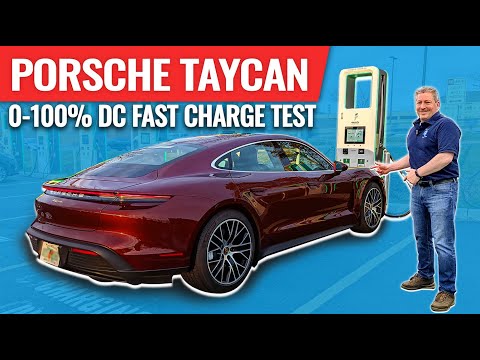
Porsche Taycan
Porsche Taycan 0 to 100% DC fast-charge test and charging-curve analysis
 ▶ Watch clip
1:01
▶ Watch clip
1:01
Nissan Leaf
Nissan Leaf capacity-bar loss and LeafSpy SOH drop
 ▶ Watch clip
9:48
▶ Watch clip
9:48
Nissan Leaf
Nissan Leaf Rapidgate explained — 40 kWh fast-charging limitation
For EV owners, buyers, and repair disputes
What does EV Risk Index help with?
EV Risk Index helps electric-vehicle owners and used-EV buyers research recalls, reliability risks, battery and high-voltage failures, warranty-expiration exposure, repair invoice questions, and dealer-service documentation. The site combines vehicle risk scores, recall tracking, owner escalation templates, and invoice analysis that helps review service records for possible recall overlap, repeated symptoms, unclear diagnostic fees, and missing repair explanations.
Software-defined vehicles fail like software — but cost like hardware.
Highest concern this quarter
All vehicles →Lowest risk picks
All vehicles →Explore the Index
Who EV Risk Index is built for
EV owners, used-EV buyers, owners reviewing repair invoices, and owners preparing complaints — each entry point leads to the right tools and templates.
Keep EV Risk Index in your Google results
If our EV research helps you make a better decision, add EV Risk Index as a preferred source on Google for easier access to future EV coverage.
Add EV Risk Index as a preferred source on GoogleEV owner community & resources
EV Risk Index Resources
Watch our consumer guides, research EV ownership issues, and connect with the EV Risk Index community.
 ▶ Watch
Video • Used EV buying
Used EV Buying Guide: What a VIN History Report Can’t Tell You
Why a clean vehicle history report still leaves the engineering and recall picture unanswered.
Watch on YouTube ▶ Watch
Video • EV problems
Episode 2 — EV Losing Power or Charging Slowly? Battery, Software & Recall Problems Explained
The common causes behind reduced power and slow charging — and which ones are the manufacturer’s problem.
Watch on YouTube ▶ Watch
Video • Buying guide
Used EV Buying Guide 2026: What to Check Before You Buy | EV Risk Index EP 1
The checks worth making before you commit to a used electric car, from battery state to outstanding recalls.
Watch on YouTube ▶ Watch
Video • Repair costs
EV Repair Costs: What to Ask Before You Pay | EV Risk Index
The questions worth asking at the service counter — before you approve the work.
Watch on YouTubeEV Risk Index
Community
Community • Join
EV Risk Index Community
EV owners · recalls · repairs · used-EV advice. Ask questions, compare experiences and connect with other EV owners.
Join the Facebook groupContributor
Guide
Guide • EV ownership
5 EV Tools Every Owner Should Know Before Facing a Big Repair Bill
A practical guide to EV tools owners can use before approving a major repair, researching vehicle risk or dealing with a warranty issue.
Read on MediumFind an independent EV specialist
Browse the directory →Search your vehicle
Make, model, year. The failure index, known defects, and recall status in under ten seconds.
See the breakdown
Six factors, published methodology, nothing hidden. Every score is defensible and verifiable.
Take action
Demand letter templates, regulator reporting links, and escalation paths for every jurisdiction.
Frequently asked questions
Plain-language answers to the questions EV owners and buyers actually ask before buying, repairing, or escalating.
What is EV Risk Index?
EV Risk Index is an independent consumer advocacy publication for EV buyers and owners. It rates electric vehicle reliability on a six-factor failure index (0–100 scale), tracks active recall campaigns across NHTSA, Transport Canada, KBA, DVSA, and other regulators, and provides free communication templates for owner escalation. The site is reader-funded and commercially independent: revenue comes from its own reports, tools, and book, not from manufacturers, dealers, repair shops, advertisers, sponsors, or affiliates, and that money does not affect scores, rankings, report wording, regulatory corroboration, or editorial conclusions.
Can EV Risk Index help me before buying a used EV?
Yes. Before buying a used EV, you can check the vehicle's risk score, review documented recall campaigns affecting that model, see known repair patterns (battery, ICCU, high-voltage, software, camera-related), and use invoice analysis to review the seller's service history for repeated visits, incomplete recall remedies, and warning signs worth raising before purchase.
Can EV Risk Index check if my EV has recalls?
EV Risk Index documents 351 active and historical EV recall campaigns with links to the official regulator lookup tools — Transport Canada, NHTSA, DVSA, and KBA. Owners should always verify final recall eligibility by VIN with their jurisdiction's regulator or the vehicle manufacturer, since the regulator is the authority and EVRI tracks campaigns but does not adjudicate them.
Can EV Risk Index review dealer repair invoices?
Yes. EV Risk Index invoice analysis reviews EV repair invoices, dealer estimates, service records, and repair orders. It extracts DTC codes, identifies repeated symptoms across visits, flags possible overlap with documented recall campaigns, and prepares questions for the dealer, manufacturer, mechanic, or regulator. Invoice analysis is a paid capability. The price is shown before checkout.
Can EV Risk Index tell if I was charged for a recall repair?
EV Risk Index cannot make a legal finding or guarantee reimbursement. Invoice analysis can review owner-provided service records, dealer invoices, DTC codes, part numbers, and repair descriptions for possible overlap with documented EV recall campaigns. If the invoice language appears connected to a recall, the report helps prepare questions for the dealer, manufacturer, or regulator — it identifies patterns, not legal conclusions.
Does EV Risk Index replace a mechanic, lawyer, or regulator?
No. EV Risk Index is a documentation and consumer information publication, not a substitute for a qualified mechanic, lawyer, or regulator. Owners with safety concerns should consult an EV-experienced mechanic; owners with legal questions should consult a licensed lawyer; recall eligibility is determined by the regulator. EVRI helps organize evidence, identify patterns, and prepare questions — it does not make professional determinations.
From EV Risk Index
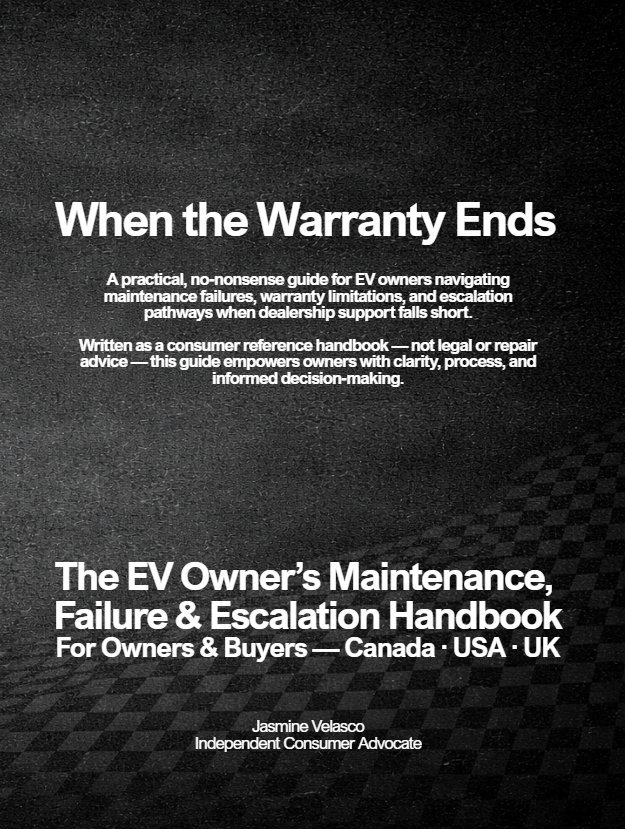
When the Warranty Ends
The EV owner's guide to maintenance failures, warranty denials, repairs, and escalation — a 247-page practical handbook by Jasmine Velasco, our independent consumer advocate.
Global EV ownership risk
Built for EV owners across Canada, the United States, the UK, and Europe.
EV Risk Index tracks electric-vehicle recalls, reliability patterns, repair documentation, and warranty-expiration risk using regulator and manufacturer information from Canada, the United States, the United Kingdom, Europe, and other markets where data is available. Owners should always verify final recall eligibility by VIN with their local regulator or manufacturer.
Data sources